Automated trading systems — also known as algorithmic trading or trading bots — execute trades automatically based on predefined rules. Instead of manually placing orders, traders allow software to manage entries, exits, and risk in real time.
These systems are designed to remove emotional decision-making, improve execution speed, and maintain discipline.
What Is an Automated Trading System?
An automated trading system is a program that:
- Identifies trading signals
- Executes trades automatically
- Manages stop-loss and take-profit levels
- Follows strict risk management rules
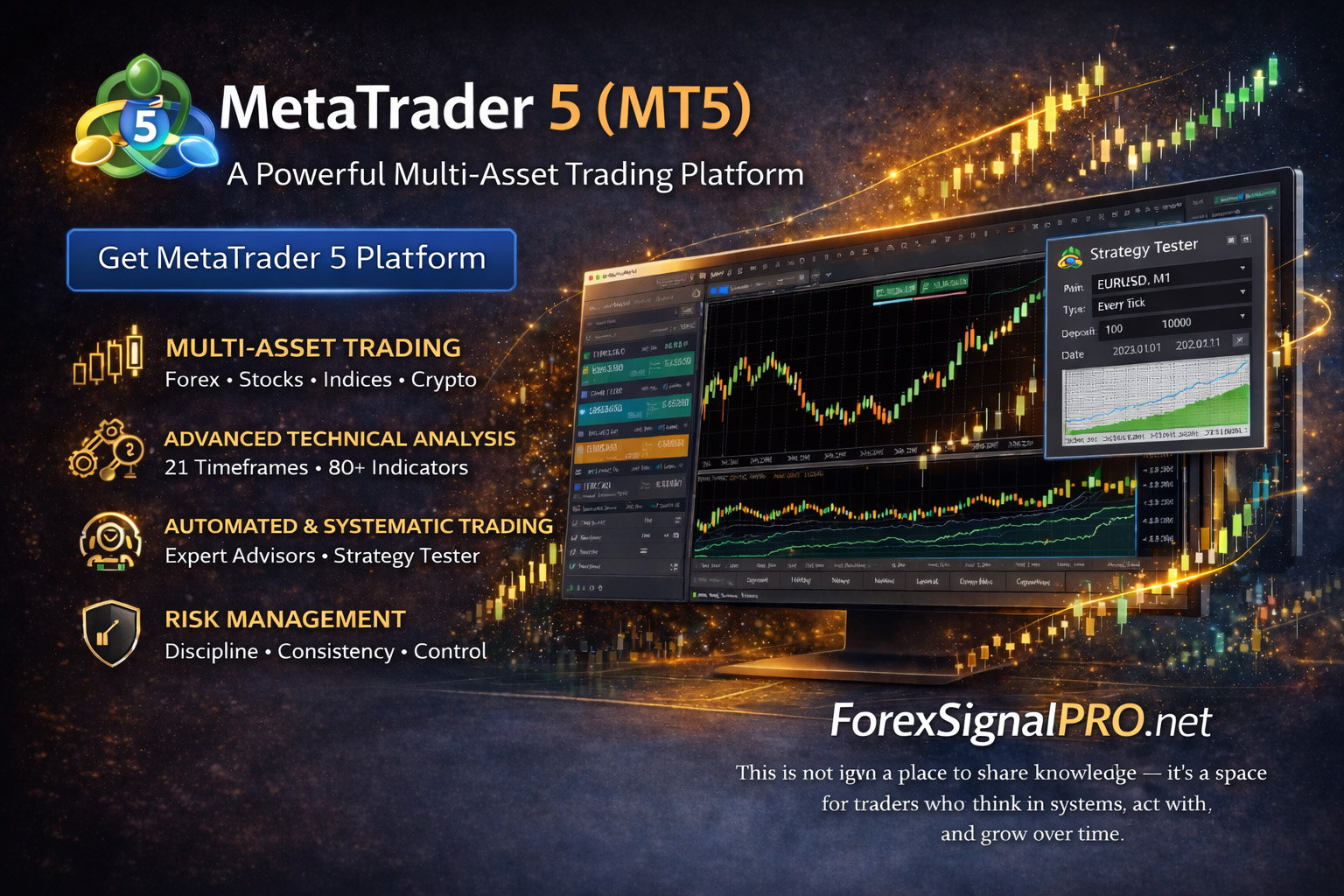
Most retail traders use platforms such as MetaTrader with Expert Advisors (EAs), while institutional traders use custom-built algorithms.
Why Traders Use Automated Systems
- Emotion-Free Trading
Automated systems eliminate fear, greed, and hesitation — the primary causes of poor trading decisions. - Faster Execution
Algorithms can react instantly to market conditions, reducing slippage and missed opportunities. - Consistency
Every trade follows the same rules, ensuring discipline over large sample sizes. - Multi-Market Trading
Systems can monitor and trade multiple currency pairs simultaneously.
The Importance of Backtesting and Forward Testing
Before deploying any automated strategy, traders must:
- Backtest using historical data
- Forward test in demo or small live accounts
A robust system should perform across different market conditions, not just in ideal historical periods.
Over-optimized systems often fail in real trading.
Risk Management in Automated Trading
Automation does not remove risk.
Successful systems include:
- Fixed percentage risk per trade
- Volatility-adjusted stops
- Maximum drawdown limits
- Position sizing rules
Without strict risk control, automated systems can destroy accounts quickly.
Limitations of Automated Systems
Automated trading is not a “set and forget” solution.
Common risks include:
- Market regime changes
- Technical failures
- Overfitting in backtests
- Broker execution issues
Regular monitoring and strategy updates are essential.
| Manual Trading | Automated Trading |
| Emotion-driven | Rule-based |
| Slower execution | Instant execution |
| Limited focus | Multi-market capability |
| Flexible | Highly consistent |
Many professionals combine both approaches: discretionary analysis with automated execution.
Final Thoughts
Automated trading systems are powerful tools — but not magic money machines.
Their success depends on:
- Strategy logic
- Risk management
- Continuous evaluation
When used correctly, automation can enhance consistency and scalability in trading.